ESG · Environmental, Social & Governance
The disclosure is due, andevery number in it depends onsuppliers you cannot see.
ESG asks you to publish claims about a chain you do not control: where it comes from, who touched it, under what conditions. We build the supplier evidence underneath every claim, so what you publish is what you can prove.
30 yrs
Doing this by hand
44,000+
Organizations assessed
500,000+
Assessments completed
100%
C-TPAT · PIP · AEO success
Trusted across three decades of supply chains
Could you defend every supplier claim in your last disclosure if someone put it on the front page?
The report reads clean. The chain behind it is the part nobody has actually examined. And the gap between the two is where brands get hurt.
The brand takes the hit. Not the supplier.
"Our brand takes the hit for every supplier we cannot see." That is the buyer's truth. You are responsible for suppliers you have never met, and the audits and certifications never stop.
Every person in the chain is being asked to prove something they do not fully control. For the buyer, that proof is the brand itself:
01
The supplier claim published on someone else's say-so.
02
The tier-two factory no one has ever named.
03
The evidence that exists only as a signed questionnaire.
Your brand is only as protected as the supplier evidence behind it.
What the disclosure asks of you
Publish it. Then be able to prove it.
Flip each obligation. Tick what your team could evidence today, supplier by supplier. Watch your exposure.
Your live exposure
15
of 15 checks still unmet
Collect the supplier data
Does the data behind your disclosure actually come from your suppliers?
flip
Step 01 · Required
Every environmental and social claim rests on supplier inputs. Collected once, from the right entity, verified. Around 40% of supplier data companies hold is incomplete or inaccurate, and most only find out when they try to use it.
Evidence every claim
Is there a document behind each sentence of the report?
flip
Step 02 · Required
A disclosure is a chain of claims. Scrutiny walks that chain backward: claim to record, record to supplier, supplier to proof. [MANDY-FACT NEEDED: which disclosure frameworks she wants named on this page, if any.]
Examine the social risk
Have the labour conditions in your chain actually been assessed?
flip
Step 03 · Required
The S in the disclosure is the chain itself: who works in it and under what conditions. An unexamined chain is an unpriced risk with your logo on it.
Hold the governance trail
Who signed off, on what evidence, and when?
flip
Step 04 · Required
Governance means the disclosure has a decision trail: who reviewed the evidence, who approved the claims, and what they saw when they did.
Refresh it every year
Does next year start from records or from scratch?
flip
Step 05 · Required
The disclosure is annual. The chain changes constantly. Without a living evidence base, every year is year one again.
You can complete 0 of 15.
The scrutiny will find the other 15.
Disclosures are written by teams who inherit the evidence problem, not the headcount to solve it. Run your 8 highest-risk suppliers through the assessment and we will show you exactly what your claims are standing on, in days.
And the report is public either way.
One supplier claim that does not survive a second look. One tier-two name that surfaces in the news attached to yours. One customer ESG questionnaire your records cannot answer.
Tightening the chain is what protects revenue: no lost contracts, no slow bleed, no quarter spent explaining.
A claim you cannot prove is a liability you published.
One family. Four ways we carry it.
The program hands you the burden.
We built four products to carry it.
Pick a product to see this page through its lens, or open COMMANDCENTER and watch the whole family answer at once.

The parent platform
Governance you can show,
not just describe.
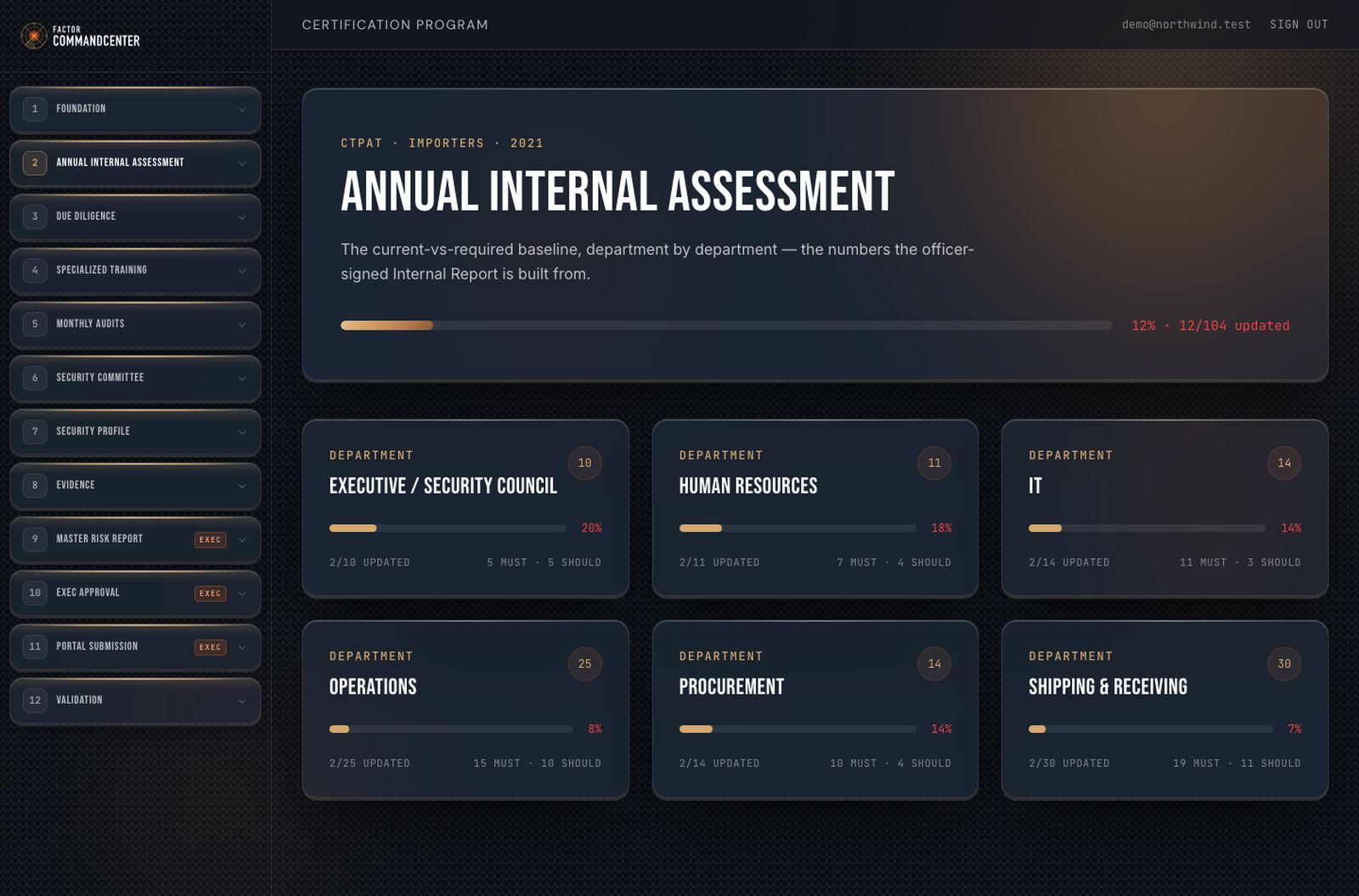
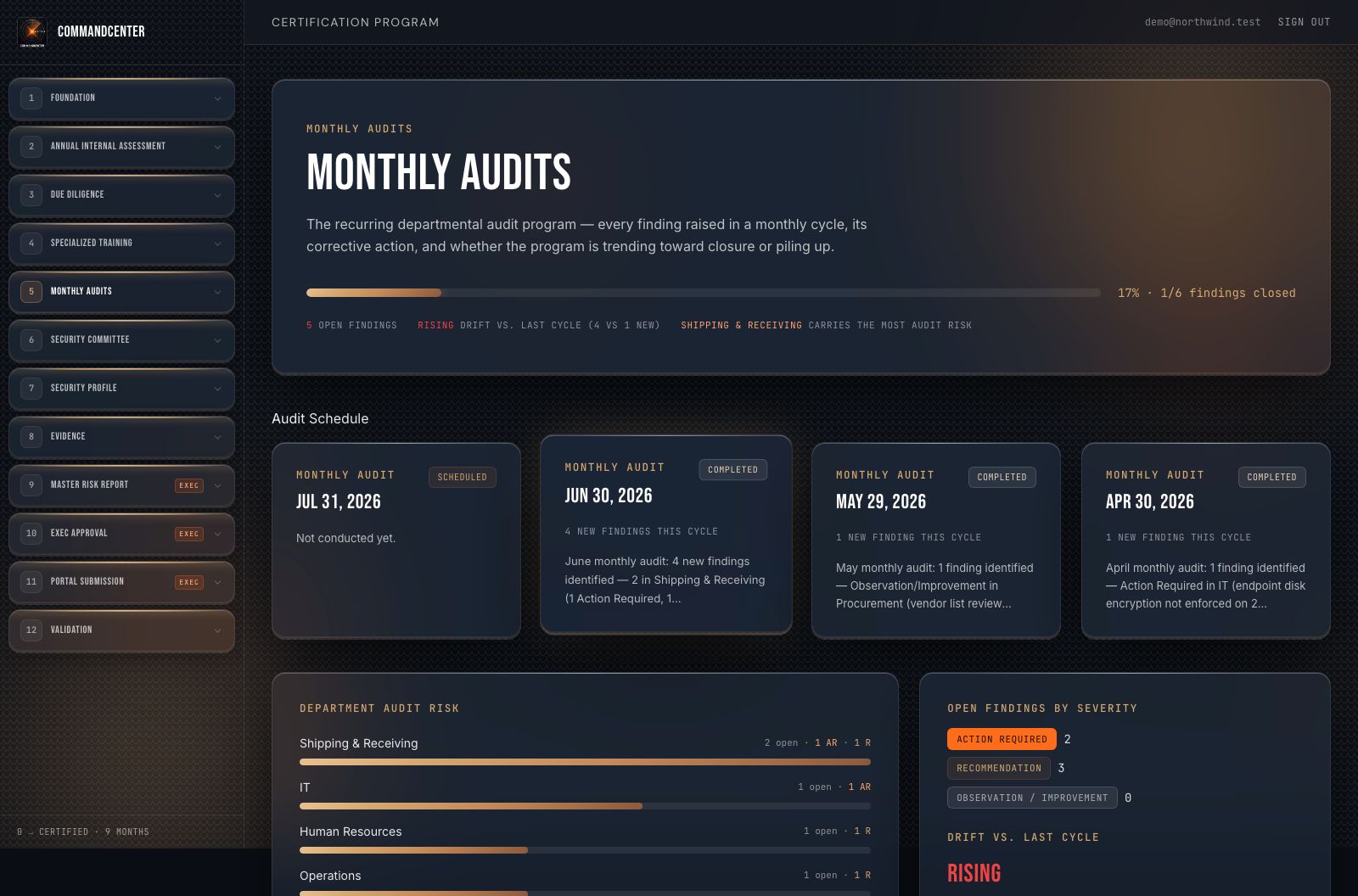
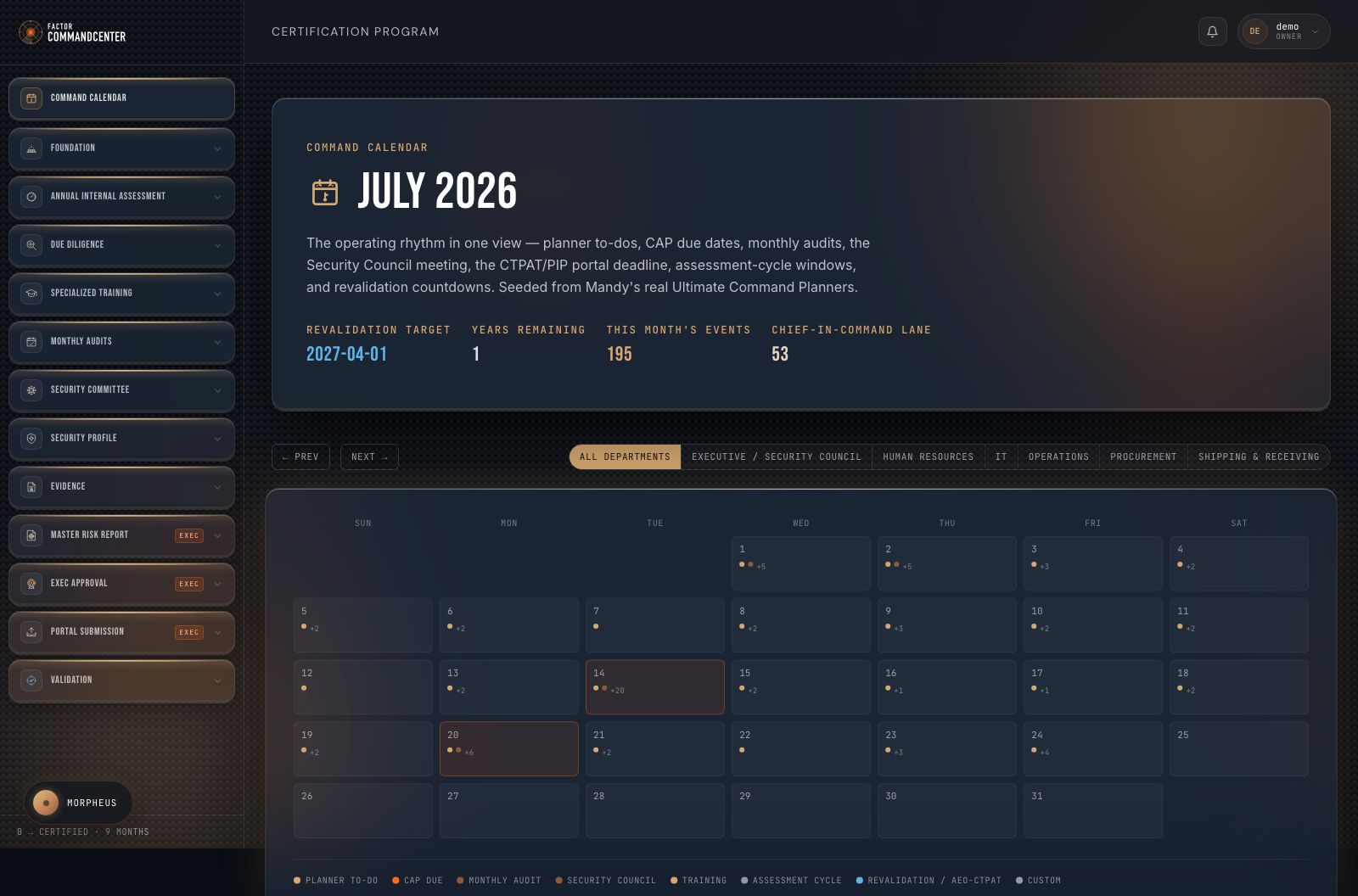
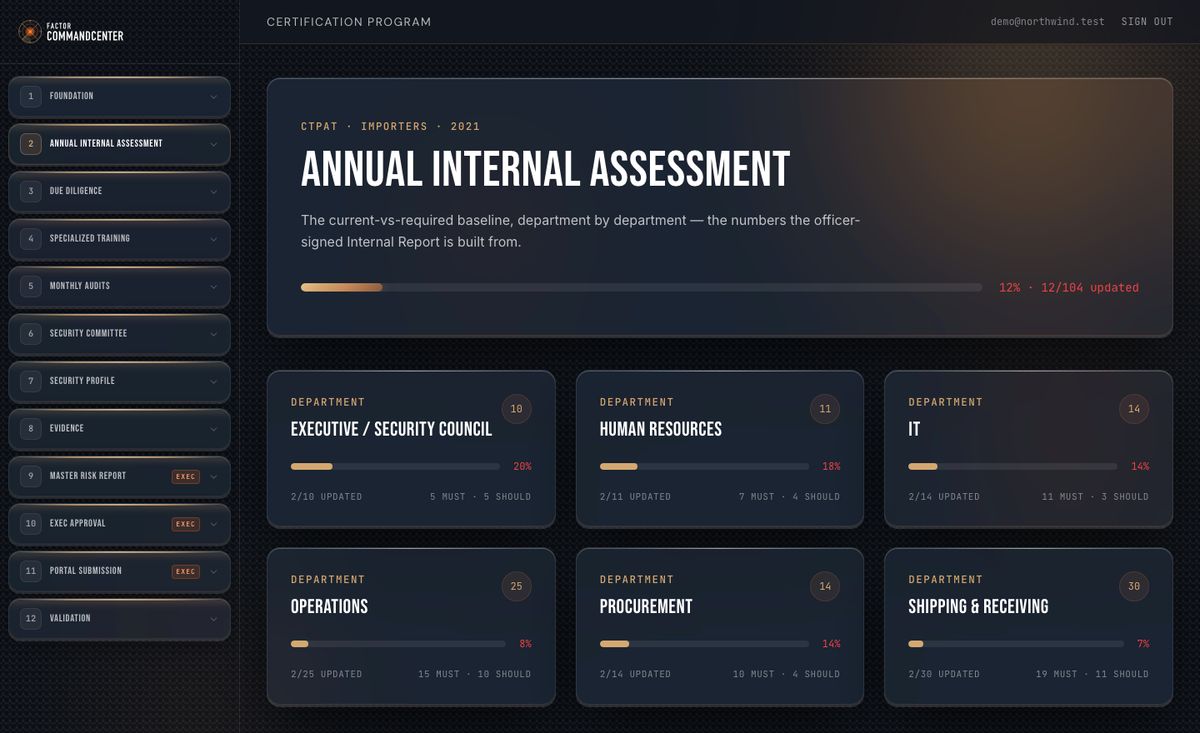
COMMANDCENTER turns the governance section of your disclosure into screenshots of how the building runs: department assessments, monthly audits, sign-offs on the command calendar, training on record. The trail exists because the work happened in it.
- Department bands: each team owns its piece of the disclosure.
- Monthly audits, so drift is caught between reporting cycles.
- Every review and sign-off dated, owned, and retrievable.

Your suppliers, carried
The evidence layer
under the disclosure.
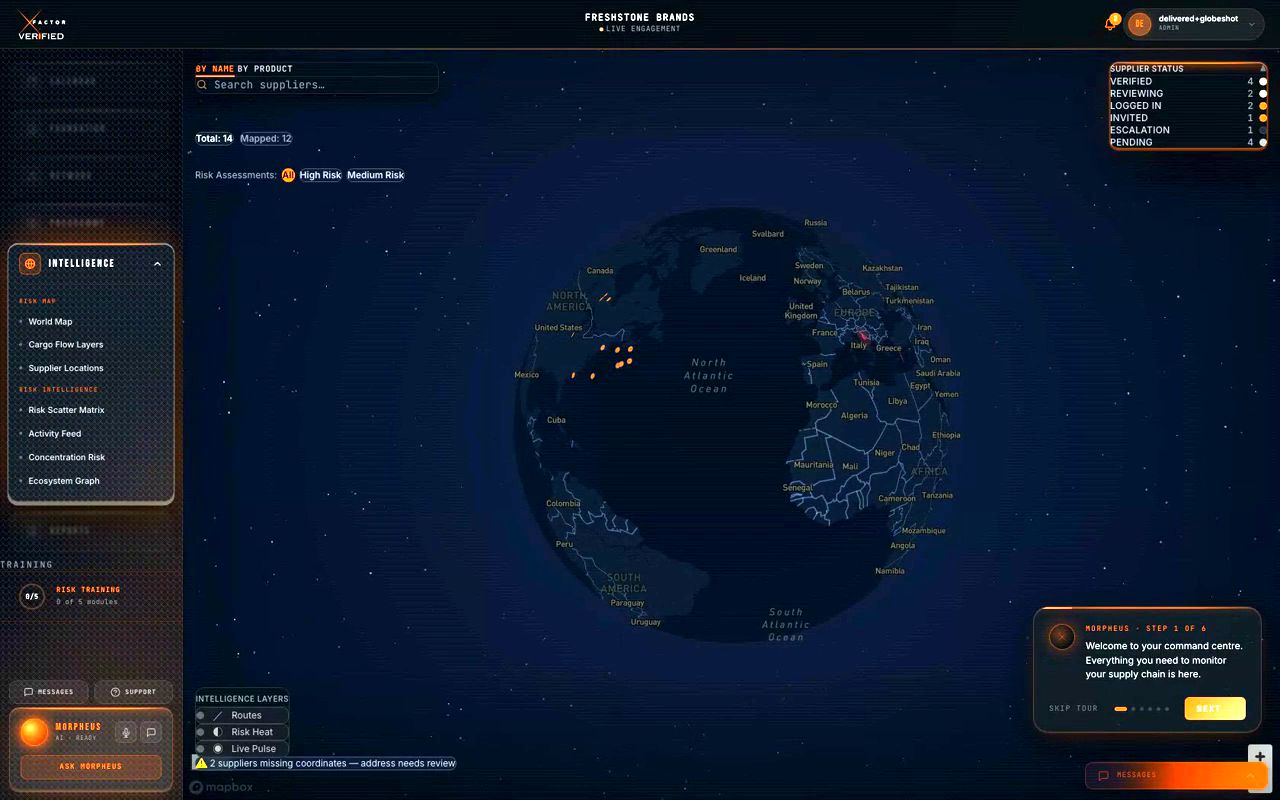
One assessment, mapped to C-TPAT, Bill S-211, PIP, AEO, ESG, and the Nestlé food program. Every supplier examined, every record verified against what you submitted, every gap corrected and signed. What you publish stops being hope and becomes a record.
- Two records kept: what you submitted and what we verified. The gap between them is your Data Quality Score.
- Suppliers reveal the parties you never knew existed: the map grows to the truth.
- Every gap becomes a finding with an owner, a deadline, and a signature on the fix.
Your people, ready
When the questions come,
your people answer from practice.
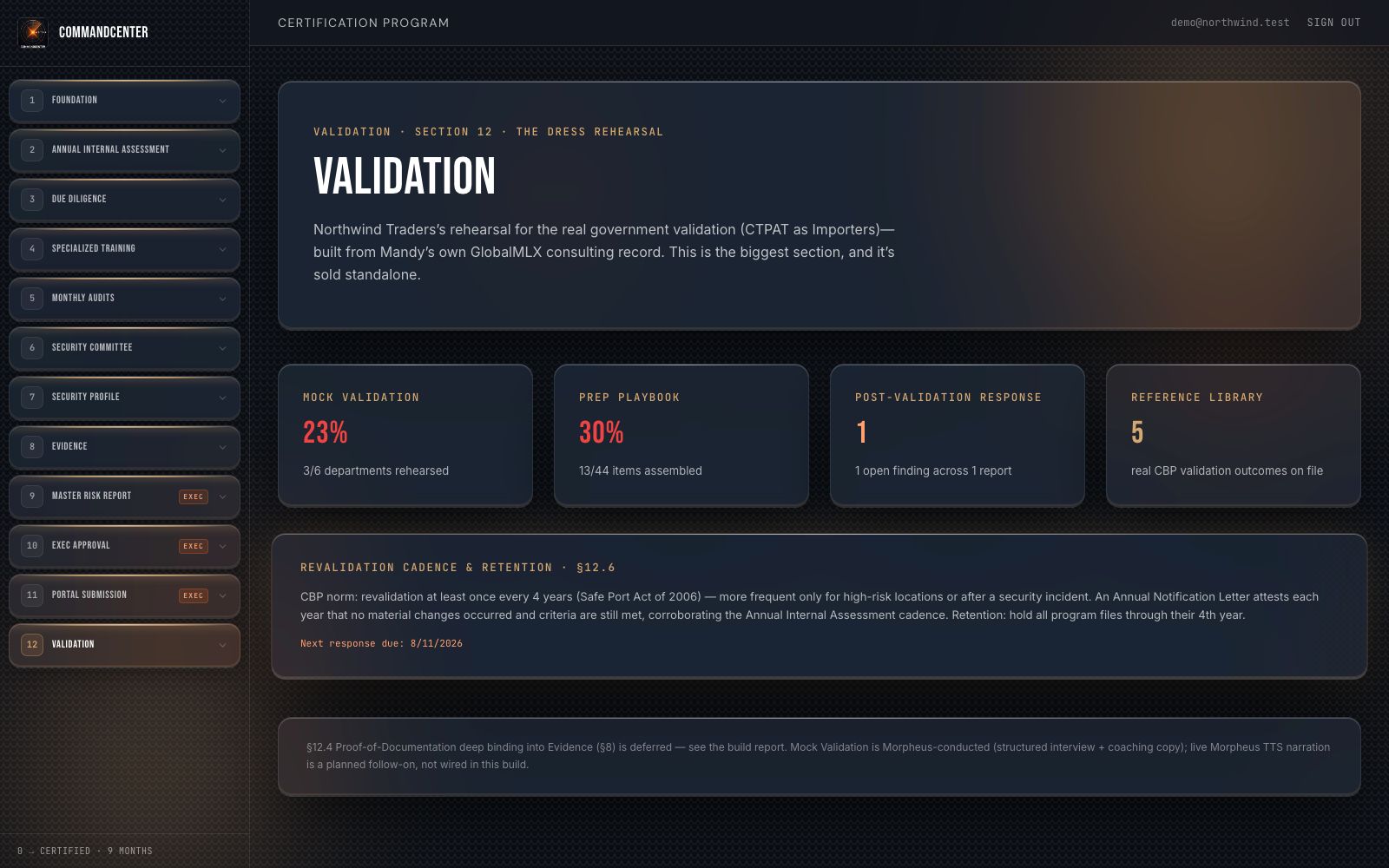
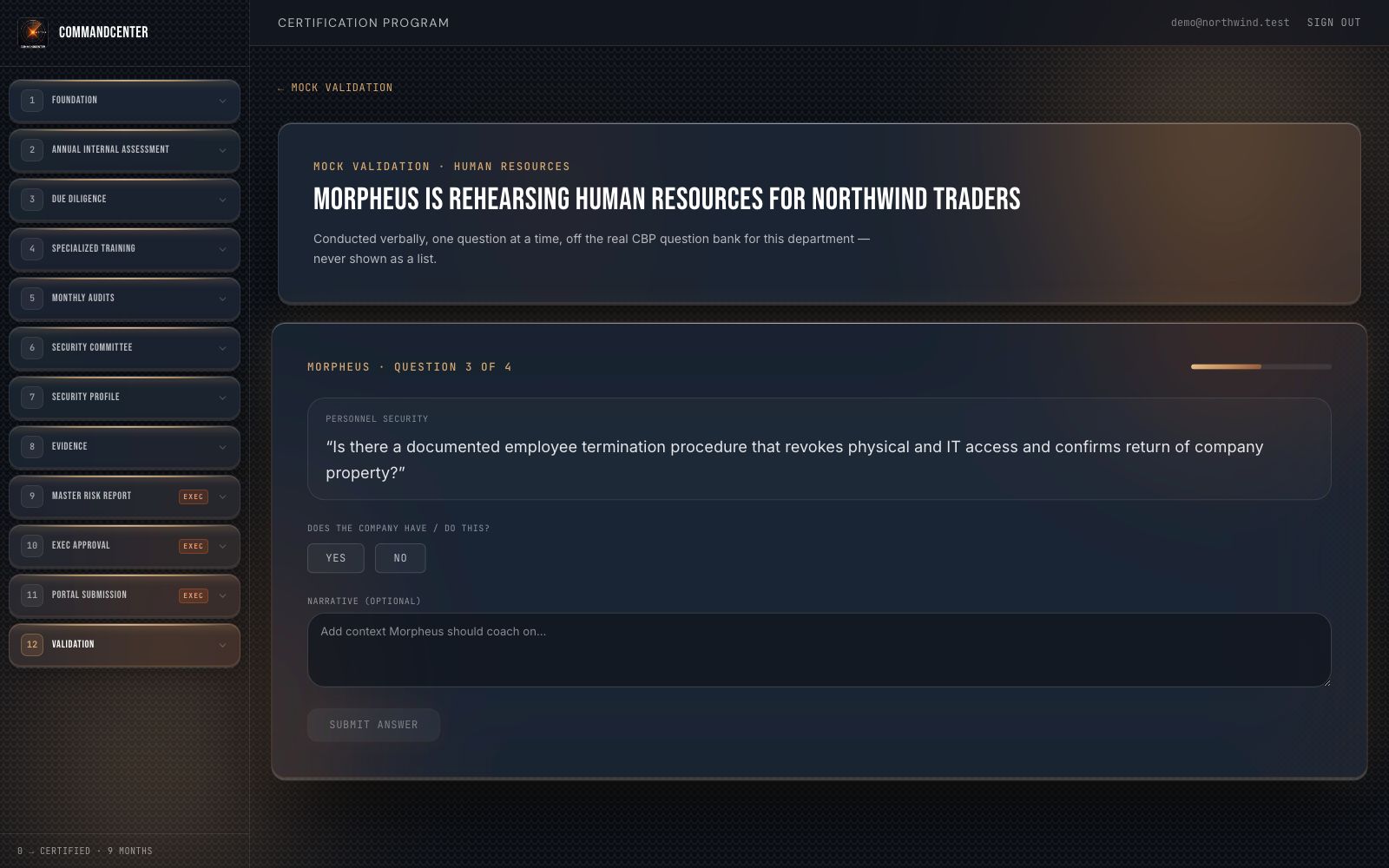
Customers, auditors, and journalists do not interview your report. They interview your people. VALIDATED rehearses those conversations, scores the answers, and closes the distance between what the disclosure says and what your departments do.
- Mock interviews across the departments the disclosure touches.
- Every answer scored, every weak spot named before it costs you.
What the burden costs
The reporting machine has a cost.
VANTAGE takes it back.
Data chased by email, evidence copied between systems, the same supplier answering the same question for the third team this year: VANTAGE reads the work your departments already log, names the black holes, and returns the hours as recovery you can audit.
- Every finding cites the department’s verbatim answer.
- Recommended, accepted, implemented, verified: a ledger finance can carry.

Bi-weekly supply-chain intelligence
The demands keep moving. The briefing keeps you ahead of them.
On the Hook is the intelligence briefing for the executive on the hook for their supply chain. Regulation reality, enforcement activity, and one move per issue, every two weeks.
Questions you would ask on a sales call
There is no sales call. So here are the answers, straight.
About ESG
Which ESG frameworks does this map to?
[MANDY-FACT NEEDED: which frameworks, if any, she wants named publicly, and her positioning on ESG scope vs. supply chain security scope.]
We already publish a sustainability report. What does this add?
The supplier evidence underneath it. A report describes the chain; this examines it, supplier by supplier, and leaves you a verified record behind every claim. The difference shows the day someone challenges a sentence.
Requesting an assessment
Is it really free? What is the catch?
Yes. Request an assessment of your first 8 highest-risk suppliers. Every request is reviewed personally before access is granted. If we do not surface a gap worth more than the ten minutes it takes to start, you have lost nothing.
Do I have to chase my suppliers to complete the assessment?
No. Morpheus sends each supplier their invitation, follows up on Day 3 and Day 7, and tracks completion in your dashboard in real time. You never send a single email yourself.
8 suppliers · by request
Run your 8 highest-risk suppliers through the full assessment. By request.
- See what your claims are standing on within your assessment window.
- No sales call. Reviewed personally before access is granted.
- Drag your list in. Morpheus does the mapping. You reformat nothing.
If we don't surface a gap worth more than the ten minutes it takes to start, you've lost nothing.